AI-assisted DRG coding for Slovak hospitals
An assistant that turns a discharge summary into a proposed DRG group, diagnoses and procedures — every code backed by a citation from the official catalogues.
- Client
- Own product
- Industry
- Healthcare
- Year
- 2026
- Platform
- Web application (on-premise or private cloud)
- Services
- Product design, UX/UI design, AI & RAG engineering, Full-stack development
The challenge
Hospital coders translate long, abbreviation-heavy discharge summaries into diagnosis and procedure codes from catalogues with thousands of entries that change every year. It is slow, and every missed or nonspecific code changes the DRG group and the reimbursement. Generic chatbots are no help: they invent codes and cannot say where an answer came from.
What we did
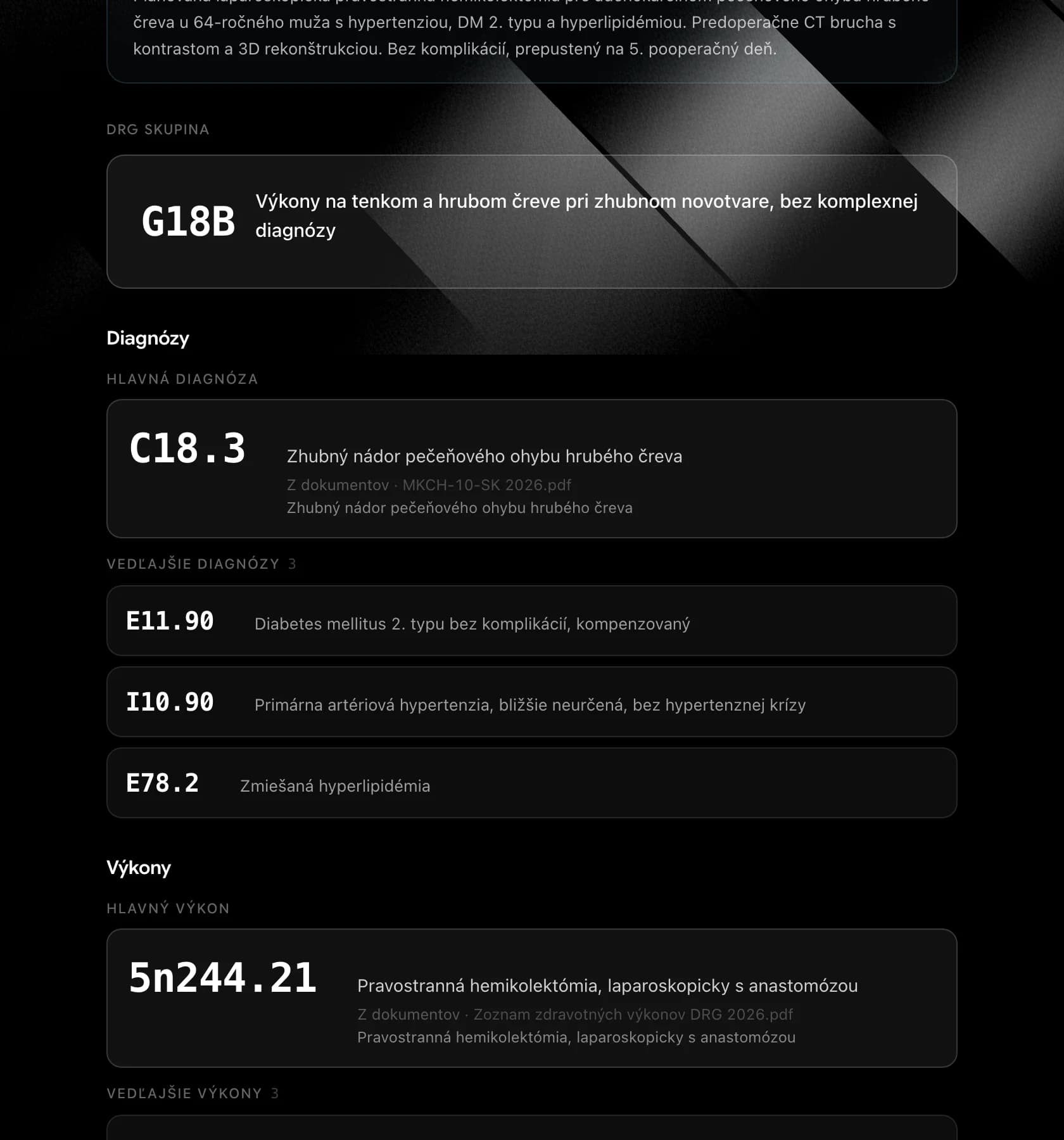
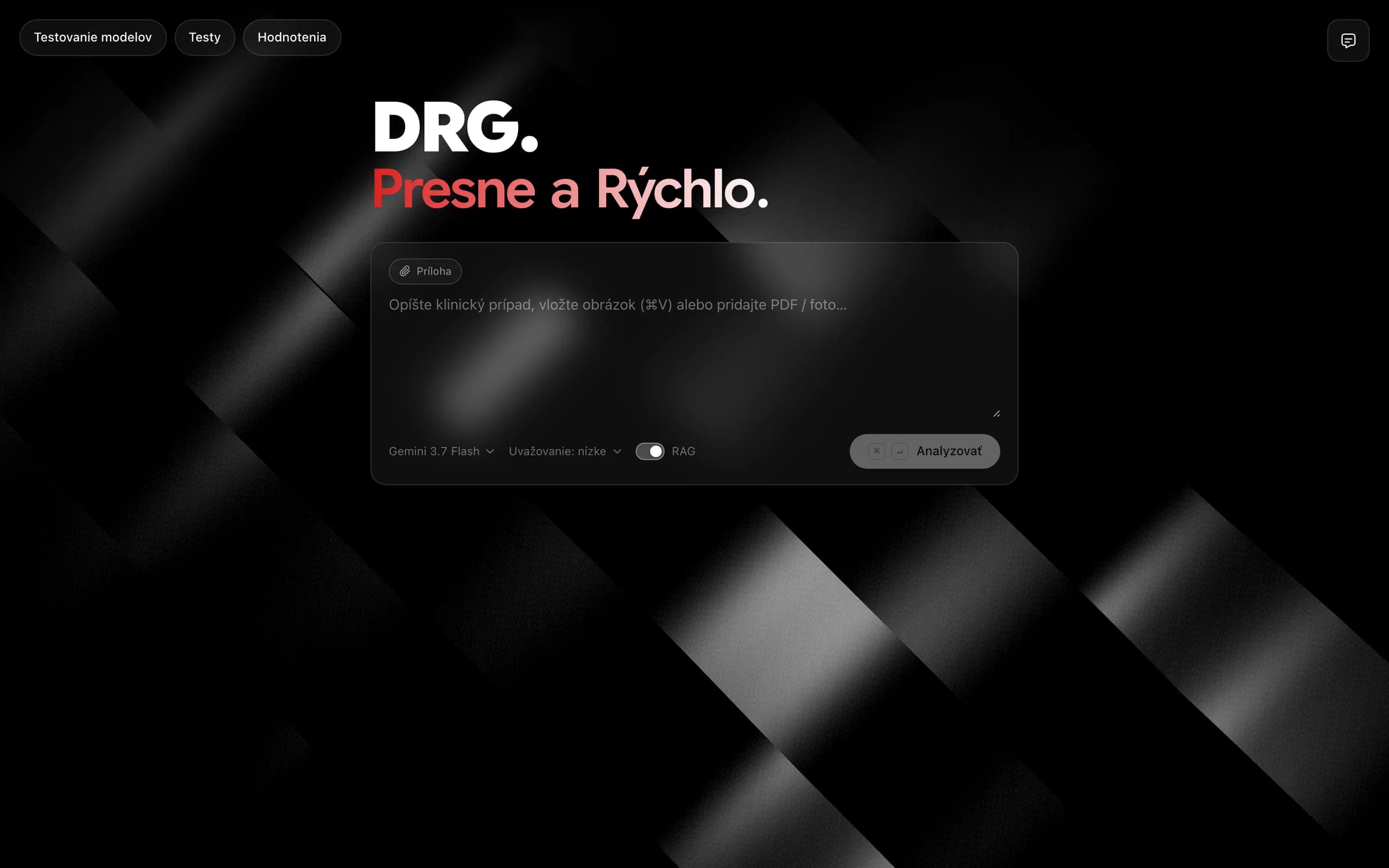
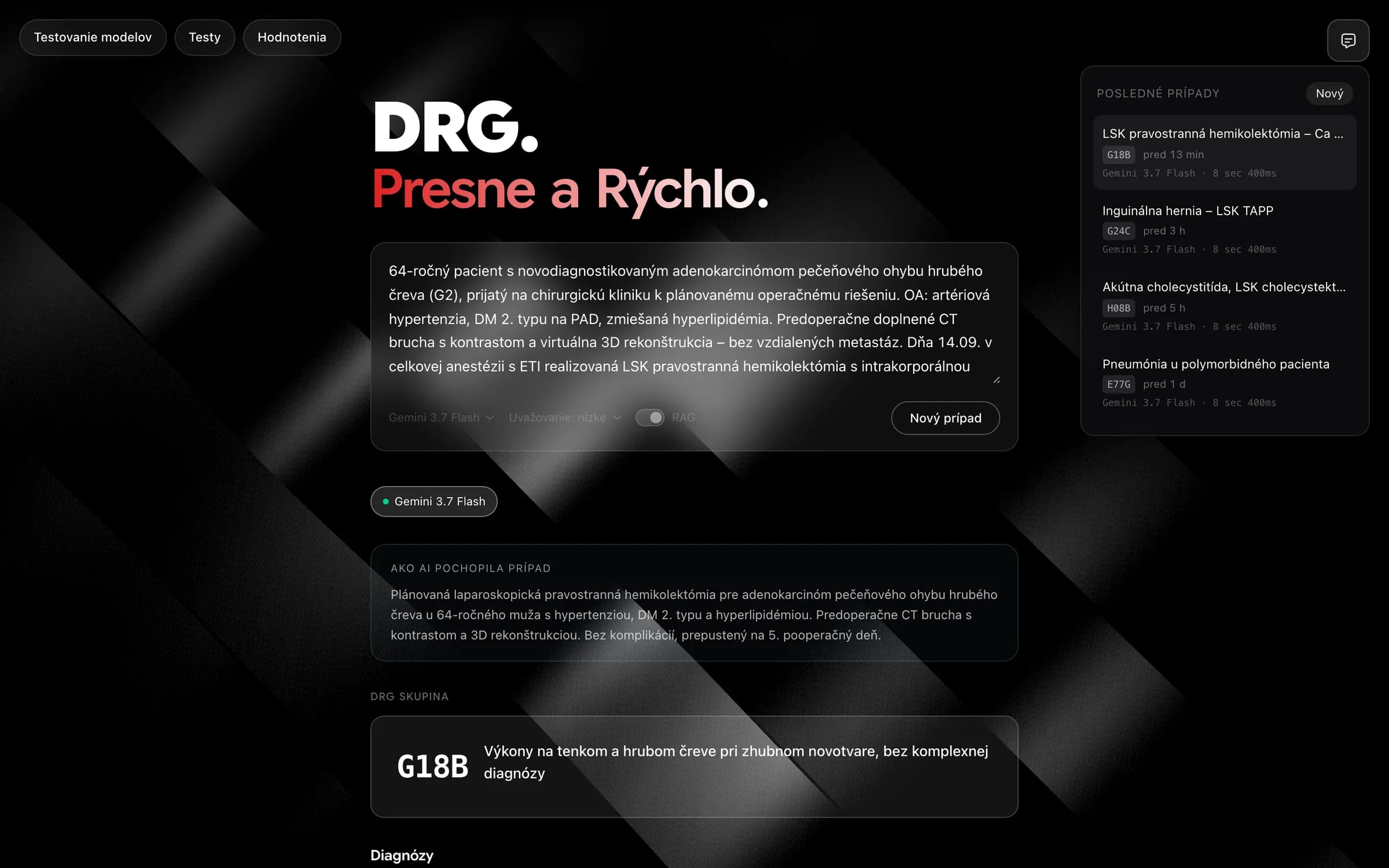
- Designed a single-screen case workspace where the answer is a living coding sheet, not a chat transcript — the case rail, coding sheet and evidence panel sit side by side.
- Built a retrieval pipeline over the official sources (MKCH-10-SK, the procedure list, the case-mix catalogue and coding rules) synced from Google Drive, with hybrid full-text and vector search in PostgreSQL.
- Made every code verifiable: citations open the exact passage and page, and hovering a diagnosis highlights the sentence in the summary that supports it.
- Added an automatic audit for the mistakes hospitals actually make — duplicate or nonspecific codes, procedures without a diagnosis, missing intensive-care data.
- Built an evaluation suite that scores the system against cases the hospital has already coded, and a side-by-side comparison of AI models by accuracy and cost.
The result
A coding assistant that proposes a complete, sourced coding in seconds while leaving the final decision with the coder. It runs in the hospital’s own infrastructure, with AI requests optionally restricted to EU providers.
Technology
- React 19
- TypeScript
- Bun
- Hono
- PostgreSQL + pgvector
- RAG
- OCR (Tesseract)
- Docker
Screens